
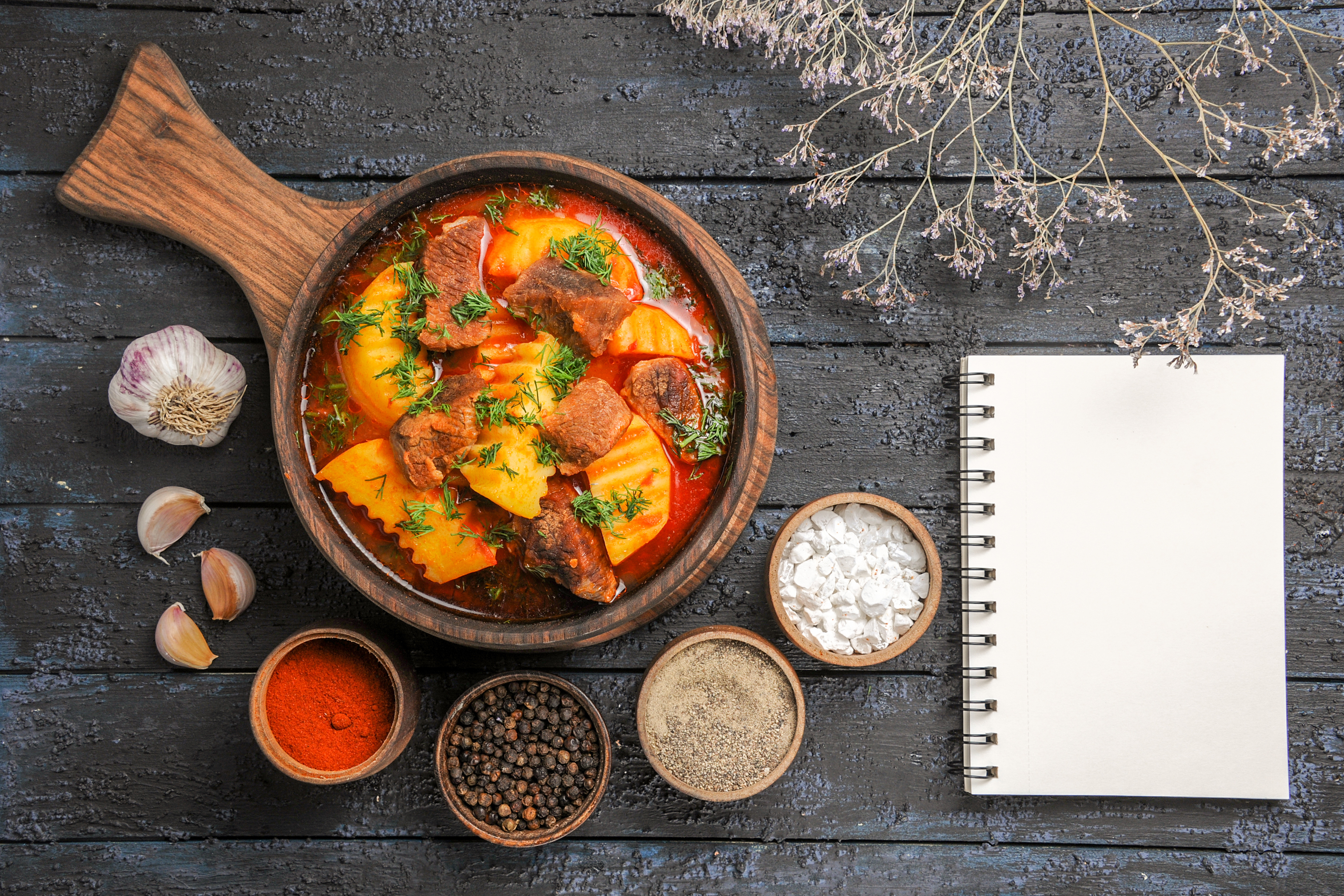

Moroccan Lam Stew
Moroccan
lamb stew is a fragrant and hearty dish that combines tender lamb with a
variety of spices, vegetables, and sometimes fruits. Here's a simple recipe to
make this delicious stew:
Ingredients:
- 2
lbs lamb shoulder, cut into chunks
- 2
tablespoons olive oil
- 1
large onion, diced
- 3
cloves garlic, minced
- 2
teaspoons ground cumin
- 2
teaspoons ground coriander
- 1
teaspoon ground cinnamon
- 1
teaspoon ground ginger
-
1/2 teaspoon cayenne pepper (optional, for heat)
- 1
can (14 oz) diced tomatoes
- 3
cups chicken or beef broth
- 2
cups carrots, sliced
- 2
cups sweet potatoes, cubed
- 1
cup chickpeas, drained and rinsed
-
Salt and pepper to taste
-
Fresh cilantro or parsley for garnish
Instructions:
1.
**Brown the Lamb**: In a large pot or Dutch oven, heat the olive oil over
medium-high heat. Add lamb chunks and brown them on all sides. Remove the lamb
and set aside.
2.
**Sauté Aromatics**: In the same pot, add the diced onion and cook until soft.
Stir in the minced garlic and cook for another minute.
3.
**Add Spices**: Add cumin, coriander, cinnamon, ginger, and cayenne (if using)
to the pot. Stir well and cook for about 2 minutes to release the flavors.
4.
**Combine Ingredients**: Return the browned lamb to the pot. Add diced tomatoes
(with their juice), broth, carrots, sweet potatoes, and chickpeas. Season with
salt and pepper.
5.
**Simmer**: Bring the stew to a boil, then reduce the heat to low. Cover and
let it simmer for about 1.5 to 2 hours or until the lamb is tender.
6.
**Serve**: Taste and adjust seasonings if necessary. Serve hot, garnished with
fresh cilantro or parsley.
Enjoy:
This stew is perfect served with couscous, rice, or crusty bread to soak up the delicious sauce. Enjoy your cooking!
Lorem Ipsum has been the industry's standard dummy text ever since the 1500s, when an unknown printer took a galley of type and scrambled it to make a type specimen book.